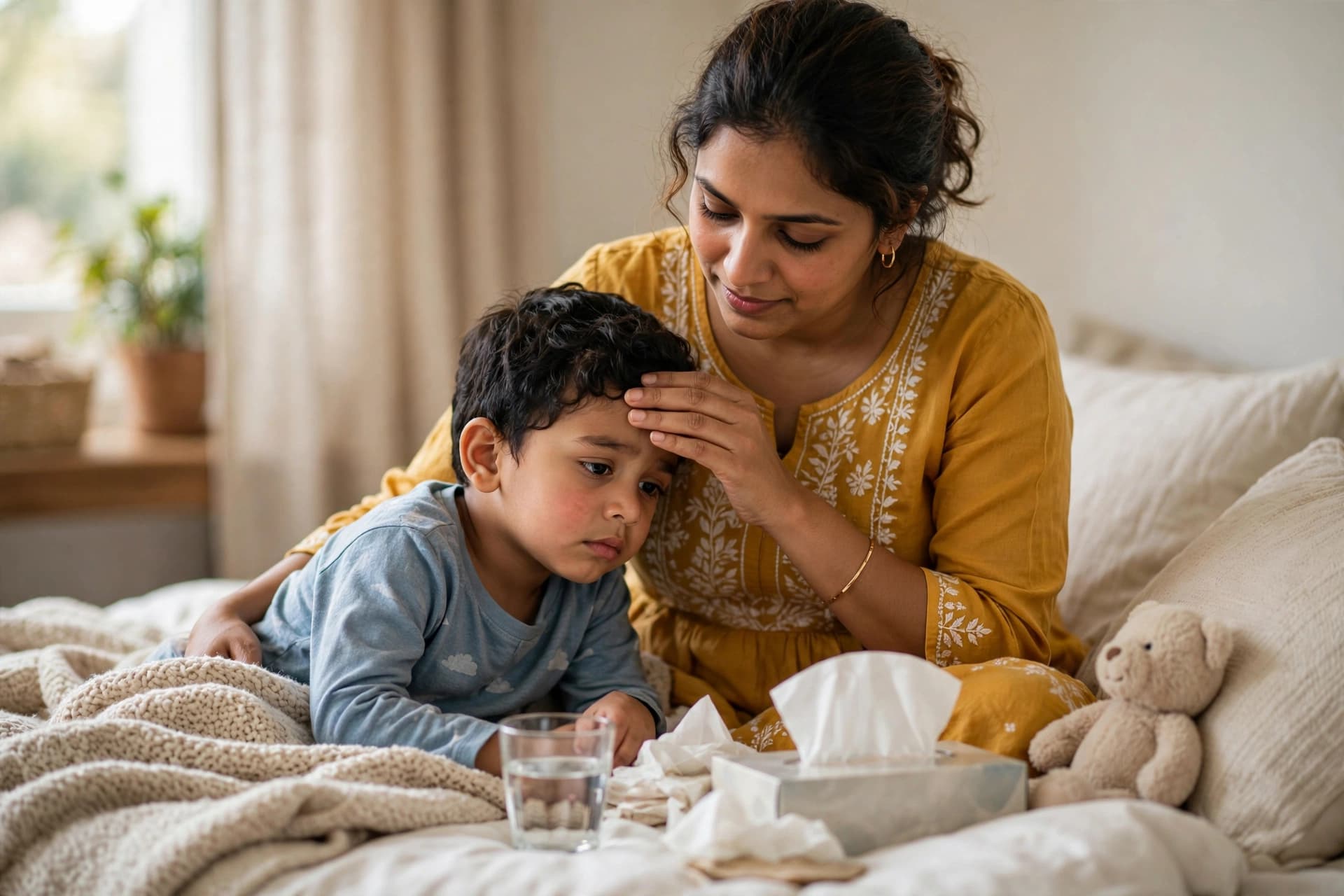
Cough and Cold in Children: Causes, Home Care and When to See a Pediatrician
Dr. Mayur Kumar Goyal
Published on September 11, 2026
Cough and Cold in Children: Causes, Home Care and When to See a Pediatrician
Cough and cold in children are extremely common, especially during the preschool and school years. A runny nose, blocked nose, sneezing and cough can be worrying for parents, particularly when the symptoms seem to return frequently.
In most cases, childhood cough and cold are caused by viral infections and improve with supportive care. However, recurring or persistent symptoms can sometimes be linked to allergies, asthma or another respiratory condition.
Knowing what you can manage at home and when your child needs medical attention can help you respond with confidence.
What Causes Cough and Cold in Children?
The common cold in children is usually caused by viruses. Children can catch different viruses throughout the year because they regularly interact with other children at school, daycare and play areas.
Cough and cold symptoms can also occur because of:
- Allergies
- Asthma
- Smoke and other airway irritants
- Postnasal drip
- Other respiratory infections
Getting several colds does not automatically mean your child has weak immunity. What matters is whether your child recovers normally between illnesses.
What Are the Common Symptoms of Cough and Cold?
Common symptoms of a cold in children include:
- Runny or blocked nose
- Sneezing
- Cough
- Sore throat
- Mild fever
- Watery eyes
- Tiredness
- Reduced appetite
A cough may continue even after the runny nose and fever have improved because the airways can remain irritated.
If your child returns to normal energy and activities after recovering, repeated minor infections may simply be part of childhood.
When Could a Recurring Cough Mean Something More?
Sometimes symptoms that appear to be another cold may have a different cause.
Allergies
Allergies can cause repeated sneezing, a runny or blocked nose and throat irritation. Symptoms may continue for longer than a typical cold or return frequently.
Asthma
A cough that repeatedly occurs at night, during exercise or along with wheezing may need evaluation for asthma.
If your child does not fully recover between illnesses, or the same symptoms keep returning, a pediatrician in Ajmer can help identify the cause.
How to Care for a Child With Cough and Cold at Home
For a child who is otherwise active, drinking fluids and breathing comfortably, supportive home care can help relieve symptoms.
Keep Your Child Hydrated
Offer age-appropriate fluids regularly. Babies should continue breastfeeding or formula feeding as appropriate.
Relieve a Blocked Nose
Saline nasal drops can help loosen mucus and relieve nasal congestion. This can be particularly helpful for babies who may find it difficult to feed with a blocked nose.
Honey for Cough
Honey may help soothe a cough in children over one year of age.
Never give honey to a baby younger than 12 months because of the risk of infant botulism.
Encourage Rest
Allow your child to rest when tired. Keep them away from cigarette smoke, strong fumes and other airway irritants that can make coughing worse.
Should Children Take Cough Syrup or Antibiotics?
Parents often want to give medicine as soon as a child starts coughing. However, over-the-counter cough and cold medicines are not routinely appropriate for young children.
Always speak with a pediatrician before giving cough, cold or decongestant medicines to a young child. Avoid leftover medicines or medicines prescribed for another family member.
Antibiotics are also not needed for most common colds, because colds are usually caused by viruses. Antibiotics should only be used when a doctor identifies a bacterial infection that requires treatment.
When Should You See a Pediatrician?
Contact a child specialist in Ajmer if your child's cough or cold:
- Persists for several weeks
- Keeps returning or becomes worse
- Is accompanied by wheezing
- Affects sleep or normal activities
- Causes difficulty feeding or drinking
- Is associated with poor weight gain
- Occurs with repeated chest infections
- Does not improve as expected
A pediatrician can determine whether your child has another viral infection or whether symptoms may be related to allergies, asthma or another condition.
Warning Signs That Need Urgent Medical Care
Seek urgent medical attention if your child:
- Has difficulty breathing or is breathing unusually fast
- Develops bluish or grey lips or face
- Is extremely sleepy or difficult to wake
- Cannot drink or feed properly
- Is getting rapidly worse
Very young babies with fever also require prompt medical assessment.
How Can You Prevent Cough and Cold in Children?
You cannot prevent every childhood cold, but good hygiene can reduce the spread of respiratory infections.
Encourage children to:
- Wash their hands regularly
- Cover coughs and sneezes with a tissue or elbow
- Avoid sharing bottles, glasses and utensils
- Stay home when sick
- Follow the recommended vaccination schedule
- Avoid tobacco smoke
Cough and Cold in Babies: What Parents Should Know
Babies need closer observation when they develop respiratory symptoms. Watch their feeding, fluid intake, wet diapers, breathing and alertness.
Do not give cough or cold medicines to a baby without medical advice.
If a young baby has fever, difficulty feeding, breathing difficulty or unusual sleepiness, seek medical attention promptly.
Frequently Asked Questions About Cough and Cold in Children
Is it normal for children to get frequent colds?
Yes. Children, particularly those attending school or daycare, can experience several respiratory infections. Frequent colds alone do not necessarily mean weak immunity.
How long does a cough last after a cold?
A cough can continue after other cold symptoms improve because the airways may remain irritated. A persistent or worsening cough should be evaluated by a pediatrician.
Can I give honey to my child for a cough?
Honey may help soothe a cough in children older than one year. Do not give honey to babies under 12 months.
Do children need antibiotics for a cold?
Usually, no. Most common colds are caused by viruses and do not require antibiotics.
When should I worry about my child's cough?
Seek medical advice if the cough persists, keeps returning, worsens, or occurs with wheezing, breathing difficulty, persistent fever or difficulty feeding.
Final Thoughts
Cough and cold in children are usually mild and improve with simple home care, but persistent, recurring or worsening symptoms should not be ignored. Paying attention to your child's breathing, feeding, energy levels and how they recover between illnesses can help you know when home care is enough and when professional evaluation is needed.
If you are concerned about your child's cough or cold symptoms, consult a pediatrician for proper assessment and guidance.
Mayur Children Hospital focuses on providing child-friendly healthcare and helping parents understand their child's health needs with proper medical guidance.