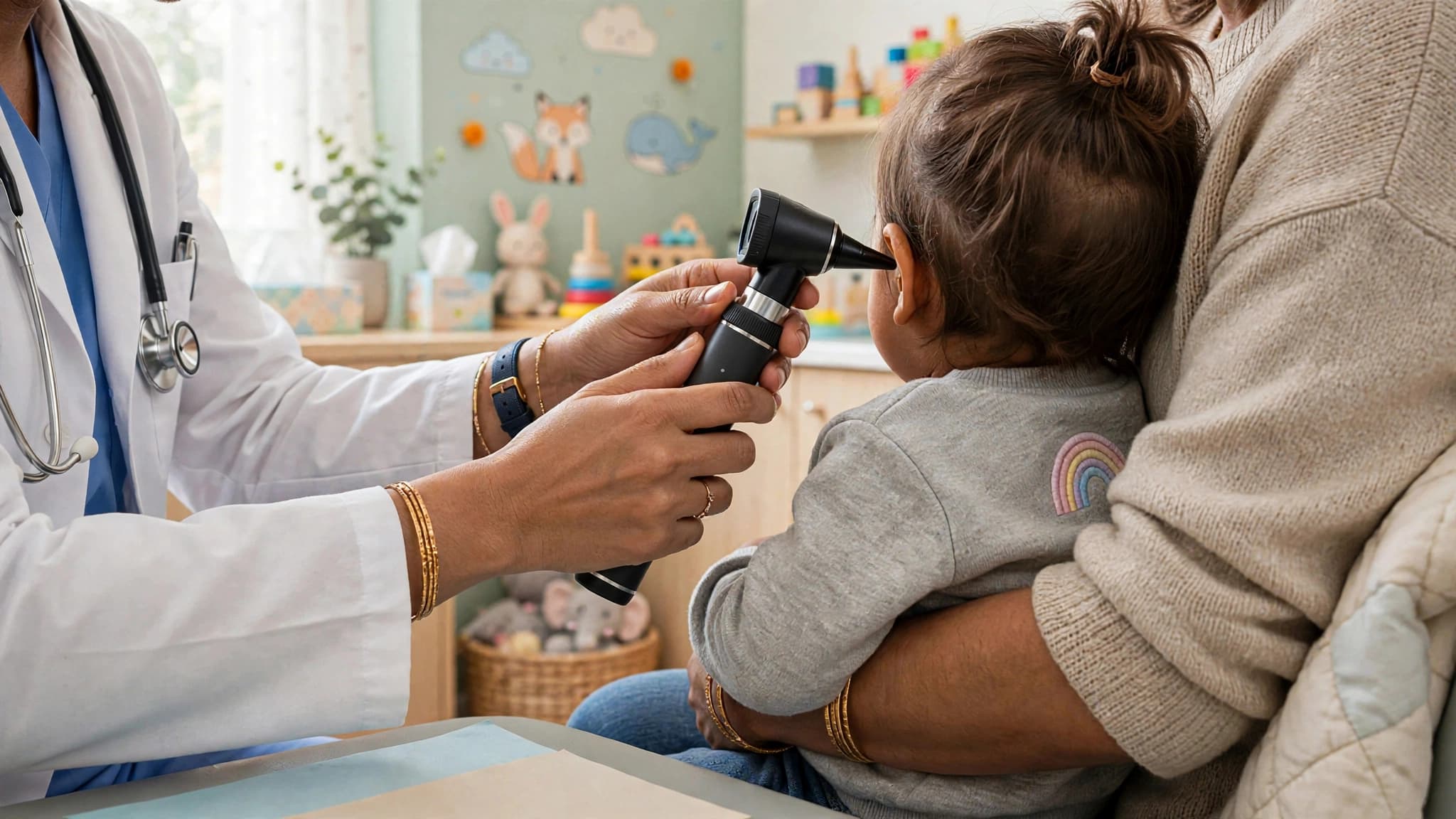
Ear Infections in Children
Dr. Mayur Kumar Goyal
Published on September 24, 2026
Ear Infections in Children
Ear infections are pretty commonly seen in children. The signs and symptoms often start suddenly, resulting in a child being fussy, crying more than usual, having trouble sleeping, or tugging on their ear. Ear infections might also follow colds or coughs.
Most of the time, ear infections are minor, but parents should be able to recognize the symptoms so that a child can receive prompt medical attention if needed.
What Is an Ear Infection?
An ear infection is caused by bacteria or a virus that inflames or infects part of the ear. Due to the small anatomy of children, they are highly prone to infections in the middle portion of the ear.
Children's ear infections are commonly known to occur in three primary areas, although middle ear infections seem to be more common among young kids.
What Causes Ear Infections In Kids?
Many things can cause ear infections in children, like:
- Common colds or coughs
- Viruses or bacteria
- Fluid retention in the ears
- Smoking and second-hand exposure
- Allergies
- Exposing young children to other infected children
- Feeding a child a bottle at bedtime
If the child has multiple ear infections due to frequent colds, he/she is at a greater risk for additional ear infections.
Common Signs & Symptoms
Symptoms and signs of ear infection could appear differently in each child. A child may come down with a moderate fever or seem to be irritable or cry more than is normal. A child may also tug at their ear or have trouble sleeping or eating.
Most young children aren't aware that an ear infection is happening or that something is wrong. If you suspect that your child has an ear infection, get them checked.
Some of the common signs and symptoms of ear infection in kids are:
- Ear pain
- Ear pulling
- Fever
- Irritability
- Loss of appetite
- Tugging on the affected ear
- Poor or low hearing
- Fluid discharge from the ear
- Less alertness
Sometimes, the only symptom seen in kids is disturbed or poor sleep or fussy behavior.
Could an Ear Infection Lead To Hearing Loss?
Hearing loss or impaired hearing might occur temporarily due to fluid accumulation behind the eardrum. Normally, hearing should return to normal after the fluid clears up and the infection runs its course.
However, parents shouldn't ignore recurring or chronic ear infections, especially if the child seems to have delayed speech or is unable to hear well.
How Are Ear Infections Treated?
There are a variety of treatment options for ear infections in kids. Which option to choose depends on the child's age, symptoms, overall health, or type of infection.
The medical treatments for ear infections can range from waiting it out to a round of antibiotics, depending on the infection's severity.
Parents shouldn't give any antibiotics to a sick child unless a doctor has asked them to do so. Antibiotics are necessary for certain infections, but not for all ear infections.
When Should You Contact a Doctor?
Parents should bring their child to the ER or a pediatrician if he/she has severe or persistent ear pain, high fever, fluid discharge from the ear, or if the symptoms don't seem to improve.
You should seek immediate medical attention if the child has recurrent or chronic ear infections or if there are concerns about hearing loss or impaired hearing.
How Can Parents Prevent Ear Infections?
There isn't a foolproof way to prevent ear infections, but taking some precautions can help.
Parents should make sure their children are up to date on all of their vaccines and practice good hygiene. Avoiding second-hand smoke and making sure a sick person doesn't share cups with a healthy child can also prevent infection. Breastfeeding offers healthy nourishment to a child. A mother should keep breastfeeding her child until they reach an appropriate age. Keeping children away from ill individuals as much as possible should also be practiced.
Final Remarks
Ear infections are common in children, but each child may display different symptoms. As a parent, if your child has trouble sleeping or hearing or seems unwell or in pain, visiting a pediatrician will help detect the problem and prescribe the relevant medical treatment.
If your child is constantly complaining of ear pain or experiencing repeated ear infections, scheduling an evaluation at a children's hospital can help determine the root cause and the best treatment.
Frequently Asked Questions
1. Are ear infections common in children?
Yes, ear infections are extremely common in children.
2. How do I know if my child has an ear infection?
Ear pain, fever, irritability, loss of appetite, disturbed sleep, and fluid discharge from the ear are some of the main signs or symptoms of ear infection in kids.
3. Can an ear infection go away on its own?
Some ear infections can indeed clear up on their own. However, it is important that the child is evaluated when symptoms are severe or persistent.
4. Does every ear infection require antibiotics?
Not every ear infection requires antibiotics. The doctor would determine the symptoms and prescribe medication accordingly.
5. Are ear infections and fluid accumulation in the ear harmful to hearing?
An ear infection or fluid accumulation could temporarily impair hearing. However, it is important that persistent, recurrent ear infections get evaluated by a medical professional.
6. Why does my child keep getting ear infections?
Repeated ear infections can be secondary to many causes, like age, multiple colds, fluid retention in the ears, and second-hand exposure to smoke, etc. The pediatrician would be able to evaluate the child and determine the cause.
7. When should I take my child to a doctor for ear pain?
Take your child to the doctor for ear pain if it is severe, if the child has a very high fever, or if there is fluid discharge from the ear. Additionally, seek medical attention if the symptoms are persisting or worsening.