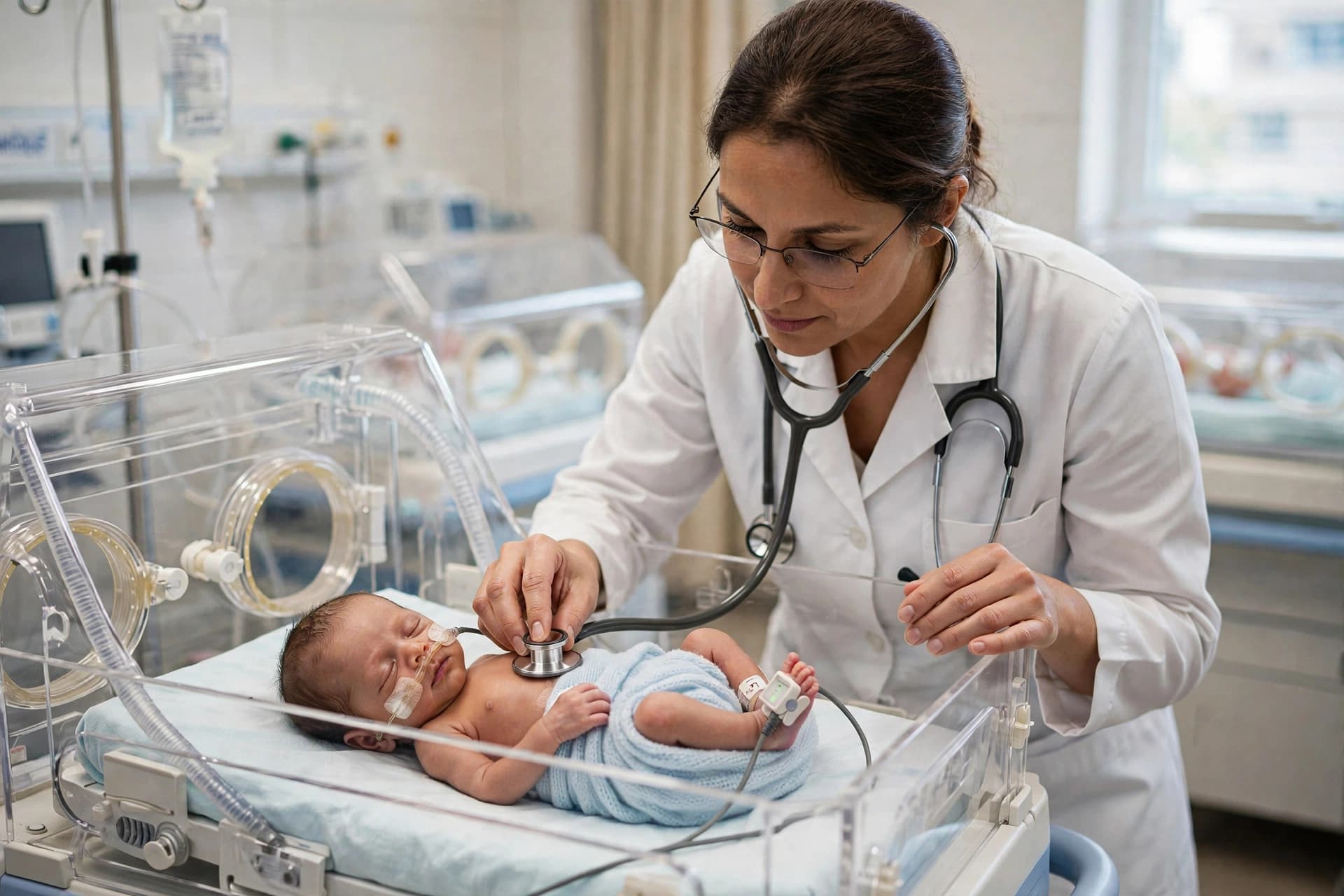
Premature Baby Care: Essential Tips for Parents
Dr. Mayur Kumar Goyal
Published on September 15, 2026
Premature Baby Care: Essential Tips for Parents
Having a premature baby discharged from the hospital can be both thrilling and terrifying for parents. It is common for premature infants to need extra care regarding feeding, sleeping, growth, and temperature. They may also be more prone to infectious diseases and require neonatal intensive care until they are stable enough to come home.
However, with proper guidance, support, and regular checkups with a pediatrician, parents can foster healthy development and growth in their premature infants.
What Is a Premature Baby?
Premature babies are those born before the 37th week of pregnancy. Depending on the gestational age at the time of birth, the infant may need neonatal intensive care until they are strong enough to come home.
Even after being discharged, premature babies might require more medical attention compared to full-term infants.
Premature Baby Care Tips
1. Keep All Doctor Appointments
After your child is discharged from the hospital, it is critical to continue regular checkups with your pediatrician in Ajmer. The doctor will monitor the infant's development, weight, feeding, hearing, breathing, and eyesight. They may also perform a physical examination, prescribe medicines, and administer recommended vaccines. During these checkups, it is essential that you bring all the papers and documents you received when the child was in the hospital.
2. Monitoring Feeding Patterns
Premature infants may face many challenges regarding feeding as they may have low milk intake due to ineffective sucking and swallowing reflexes. Although breast milk is always recommended, every premature baby has unique nutritional requirements, so your pediatrician will develop a feeding program tailored to your child's needs.
You should consult a doctor if the infant frequently refuses feeds, vomits, is too tired to suck, or is not gaining weight.
3. Monitoring Weight Gain
It is entirely normal for parents to feel concerned if their premature baby weighs less than the infants born during full-term pregnancy.
However, comparing a premature baby to a full-term newborn is not advisable as the former has unique growth and developmental patterns. Your pediatrician will monitor the baby's weight, height, and head circumference during routine checkups to ensure they are within the normal range.
4. Provide Comfort and Regulate the Baby's Body Heat
Premature infants have lower tolerance for cold temperatures, so it is critical to keep them warm and cozy. Dress the baby according to the weather and strictly follow the doctors' instructions regarding keeping the infant comfortable and safe. Your doctor may also recommend Kangaroo Mother Care (KMC) for premature babies. KMC is a method of continuous skin-to-skin holding that provides the baby with warmth, comfort, and promotes bonding between the parent and the child.
5. Protect the Baby from Infections
Premature infants are more likely to have weakened immune systems, so it is crucial to keep them away from potentially sick individuals. Moreover, parents and caregivers should maintain proper hand hygiene before touching the infant. A few other measures to protect premature babies from infections are:
- Limit the use of feeding tubes and make sure they are sterilized before use
- Keep the infant in a clean environment
- Avoid exposing the child to tobacco smoke
- Ensure that the recommended shots are up-to-date
Visitors should also sanitize their hands before holding the baby.
6. Safe Sleeping Environment for Premature Babies
It is essential to provide a safe sleeping environment for the infants to avoid dangerous conditions such as SIDS. Unless the doctor advises otherwise, always put the infant on their back for both naps and at night. Premature babies should always sleep on a firm and flat surface.
Avoid using a pillow, comforter, decorative toys, and any other loose objects in the crib as they can cause suffocation and increase the risk of SIDS. Besides, the parent should strictly follow the sleeping instructions provided by the doctors if the infant has specific medical needs.
7. Corrected Age
Premature infants have lower rates of muscle control, visual and hearing abilities, and language and speech development. The most common condition observed among premature infants is Failure to Thrive, a medical condition characterized by poor weight gain and slowed overall growth. Doctors often use corrected age to evaluate the development of these children.
A corrected age is used when the infant is between 3 and 7 years old, and their development is behind that of other children. If you notice any abnormality in the development of your child, you should consult a pediatrician.
8. Vaccines and Checkups
In addition to regular checkups, it is essential to store and administer prescribed medicines and vaccines. Vaccines are a secure way to keep infants safe from various diseases. The recommended vaccination schedule for premature babies may vary depending on their medical history, so it is vital to consult your pediatrician.
Checkups also play a significant role in the premature baby care guide as they enable early detection of possible concerns regarding growth, development, and feeding. During these visits, the pediatrician will observe the infant's general health, diet, and weight gain.
Signs and Symptoms Parents Should Watch For
Parents should seek immediate medical care if they notice a sudden change in the infant's feeding, breathing pattern, level of activity, urination, weight gain, alertness, or body temperature.
Parents should also see a doctor if the child experiences extreme difficulty in breathing, blue or grey lips and skin, seizures, or extreme drowsiness or unresponsiveness.
When Should Parents Take the Baby To a Doctor?
Even if the baby appears to be healthy, it is crucial to take them to a pediatrician for proper guidance and instructions regarding premature infants' feeding and nutritional needs. Parents should always consult a medical professional if they are unsure if their child's symptoms require immediate attention.
Premature Baby Care in Ajmer
If you are a parent in Ajmer who has concerns regarding prematurely born infants, you can consult a qualified pediatric or neonatal medical professional who can provide appropriate care and support.
At Mayur Children Hospital, Ajmer, you can get expert-level guidance and treatment for premature baby care, including post-discharge guidance and instructions.
Every premature infant is unique and has specific neonatal care requirements depending on their medical needs, so it is essential to seek the advice of a healthcare professional.
Conclusion
Overall, parents who have recently had a premature baby need to pay special attention to their child's health.
Feeding, weight gain, sleeping patterns, vaccination, and regular checkups can contribute to the healthy growth and development of a premature infant. If you are a parent who is concerned about your child's post-discharge premature baby care, it is essential to consult a pediatrician for individualized support and treatment.
Frequently Asked Questions
1. What is a premature baby?
A premature baby is a child born before completing 37 weeks of pregnancy.
2. Can a premature baby be cared for at home?
Yes, a premature baby can be cared for at home if they are strong enough to withstand the transition. Nonetheless, it is critical to consult a pediatrician if you have any concerns about your child's health.
3. How can I help my premature baby gain weight?
You should follow the feeding program designed by your pediatrician and ensure that the infant attends regular growth checkups. Moreover, it is vital not to alter the diet and avoid giving supplements unless the doctor instructs otherwise.
4. Do premature babies need regular pediatric check-ups?
Yes, regular check-ups are necessary to ensure that the child is developing normally.
5. What is corrected age for a premature baby?
Corrected age refers to the chronological age of a premature baby subtracted by the number of weeks they were born prematurely.
6. Are premature babies more likely to get infections?
Yes, premature babies are more likely to get infections as they have weaker immune systems. Thus, it is critical to keep them away from sick people and maintain proper hand hygiene.
7. When should I take my premature baby to a doctor?
You should take your premature baby to a doctor if you notice a sudden change in their feeding, breathing pattern, activity level, and weight. You should also visit a medical professional if the child has a fever, is too tired to be responsive, or has any other concerning symptoms.