
Warning Signs in Children Parents Should Never Ignore
Mayur Children Hospital
Published on September 7, 2026
Warning Signs in Children Parents Should Never Ignore
Quick answer: Never ignore trouble breathing, blue or grey lips, seizures, being hard to wake, a stiff neck with fever, a rash that does not fade under pressure, fever in a baby under 3 months, signs of dehydration, loss of skills a child already had, or talk of self-harm. These need urgent medical help. Milder but persistent changes in growth, behaviour or development deserve a pediatrician visit soon.
Emergency: If your child is struggling to breathe, unresponsive, or having a seizure, call your local emergency number now (112 in India, 911 in the US, 999 in the UK). Do not wait for symptoms to settle.
Trust Your Instincts as a Parent
You know your child's normal better than anyone. Pediatric guidance consistently says that a parent's worry that something is not right is a valid reason to seek advice. Children, especially babies, can worsen quickly, so speaking to your pediatrician early is safer than waiting.
Red, Amber or Green? Know How Urgent It Is
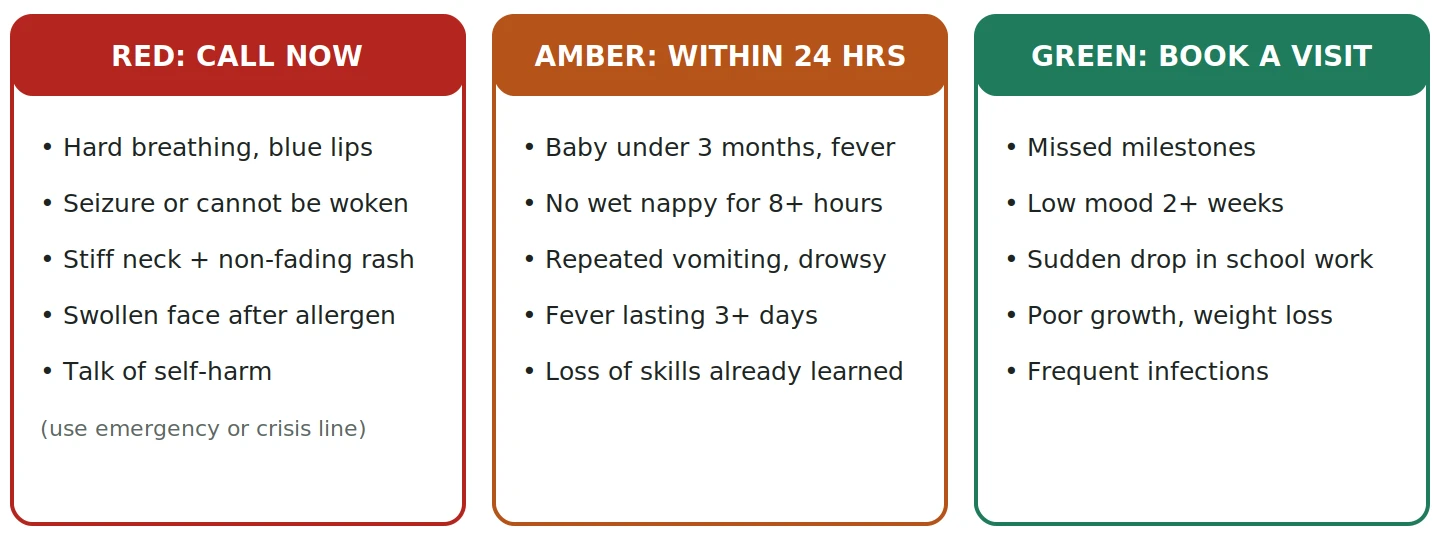
This is a general guide only. Thresholds vary by country and by your child's history, so follow your pediatrician's advice.
| Level | What to Look For | What to Do |
|---|---|---|
| Red | Hard breathing, blue lips, seizure, cannot be woken, stiff neck with non-fading rash, swollen face after an allergen, talk of self-harm | Call emergency services or a crisis line now |
| Amber | Fever in a baby under 3 months, no wet nappy for 8+ hours, repeated vomiting with drowsiness, fever lasting 3+ days, loss of skills already learned | See a doctor within 24 hours |
| Green | Missed milestones, low mood for 2+ weeks, sudden drop in school work, poor growth or weight loss, frequent infections | Book a pediatric visit soon |
Physical Warning Signs
| Area | Warning Sign | Action |
|---|---|---|
| Breathing | Fast or laboured breathing, grunting, ribs pulling in, blue or grey lips | Emergency |
| Brain and nerves | Seizure, unresponsive or very hard to wake, stiff neck, severe headache with vomiting | Emergency |
| Skin | Rash that does not fade when a glass is pressed on it, especially with fever | Emergency |
| Fever | 38°C (100.4°F) or higher in a baby under 3 months; fever with unusual sleepiness at any age | Same-day care |
| Hydration | No wet nappy for 8+ hours, dry mouth, no tears, sunken eyes or soft spot | Same-day care |
| Digestion | Repeated vomiting (especially green), blood in stool or vomit, severe belly pain | Urgent care |
| Growth and energy | Poor weight gain, unexplained weight loss, extreme thirst and frequent urination, unusual tiredness or paleness | Doctor visit soon |
| Eyes and ears | White glow in the pupil in photos, persistent squint, not reacting to sounds | Doctor visit soon |
Developmental Red Flags by Age
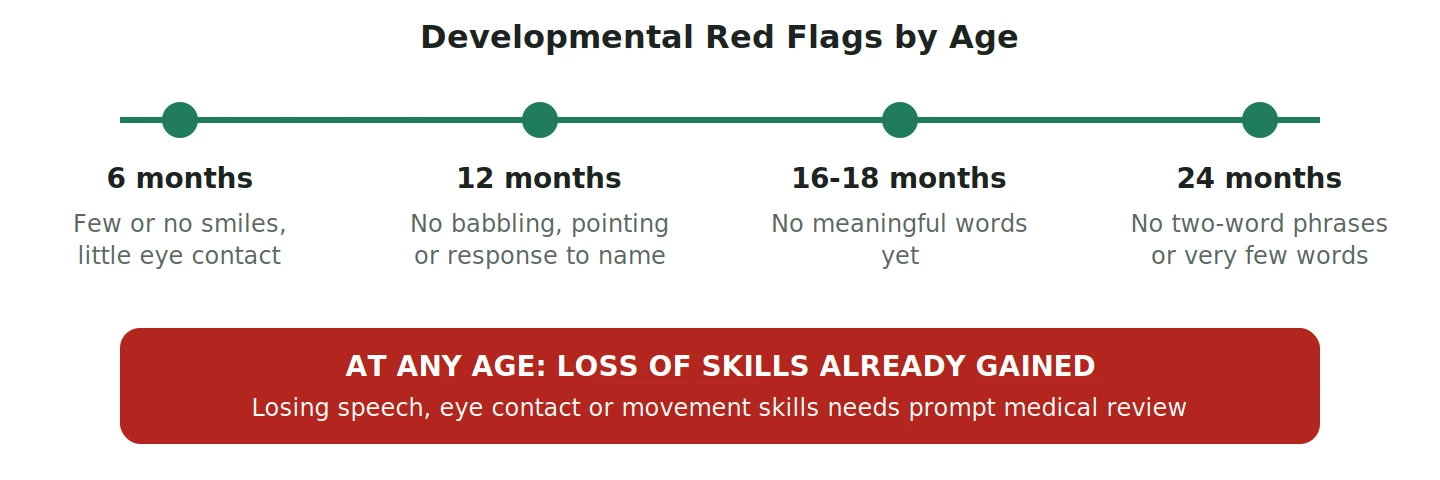
Every child develops at their own pace, but some patterns are worth checking early. Early support for speech, hearing and autism-related concerns works best when started young.
| Age | Red Flag | Suggested Step |
|---|---|---|
| 6 months | Few or no smiles, little eye contact | Mention it at the next check-up |
| 12 months | No babbling, pointing or response to name | Request a developmental screening |
| 16 to 18 months | No meaningful words | Speech and hearing assessment |
| 24 months | No two-word phrases or very few words | Speech and developmental evaluation |
| Any age | Loss of skills already gained | See a pediatrician promptly |
Milestones vary between children. These are prompts to talk to a pediatrician, not a diagnosis.
Emotional and Behavioural Warning Signs
| Warning Sign | What to Do |
|---|---|
| Talk of self-harm, suicide or not wanting to be here | Seek help immediately through emergency services or a crisis line (for example 988 in the US, Tele-MANAS 14416 in India) |
| Persistent sadness, irritability or withdrawal for more than 2 weeks | Book a pediatric or child mental health consultation |
| Big changes in sleep or appetite without an obvious cause | Track patterns and discuss with your doctor |
| School refusal, sudden drop in grades or loss of interest in favourite activities | Talk with your child and the school, then seek professional advice |
| Extreme fear, panic or frequent stomach aches linked to specific situations | Consult a doctor to rule out physical and emotional causes |
| Unexplained injuries, fear of a particular person or place, or sexual knowledge unusual for their age | Stay calm, listen, and contact a doctor or child protection service |
How to Prepare for the Doctor's Visit
- Note when symptoms started and how they changed.
- Record temperature readings, feeds and wet nappies or toilet trips.
- Take photos of rashes and short videos of unusual movements or behaviour.
- List medicines given, allergies and vaccination status.
- Write down your questions before you go.
Important: This guide is educational and does not replace professional medical advice. When in doubt, call your pediatrician, your local nurse line, or emergency services.
Final Thoughts
Most childhood illnesses pass without trouble, but a few signs should never be brushed aside: breathing difficulty, seizures, hard-to-wake drowsiness, non-fading rashes, fever in young babies, dehydration, lost skills and talk of self-harm. Learn the red, amber and green signals, keep a trusted pediatric number handy, and trust your instincts. If something worries you, book a pediatric consultation without delay. Acting early protects your child's health.
Frequently Asked Questions
1. What are the most serious warning signs in children?
Trouble breathing, blue or grey lips, a seizure, being unresponsive or very hard to wake, a stiff neck with fever, and a rash that does not fade under pressure need emergency care immediately.
2. When is a fever an emergency in a baby?
A temperature of 38°C (100.4°F) or higher in a baby under 3 months needs urgent same-day assessment, even if the baby looks well.
3. What are signs of dehydration in children?
No wet nappy or urine for 8 hours or more, dry mouth, no tears when crying, sunken eyes or soft spot, and unusual drowsiness.
4. When should I worry about my child's speech or development?
Speak to a pediatrician if your child loses skills they had, does not respond to their name or use gestures by 12 months, or has no meaningful words by about 16 to 18 months.
5. What emotional warning signs should parents never ignore?
Talk of self-harm needs immediate help. Sadness, withdrawal, sleep or appetite changes, or school refusal lasting more than 2 weeks also need professional support.